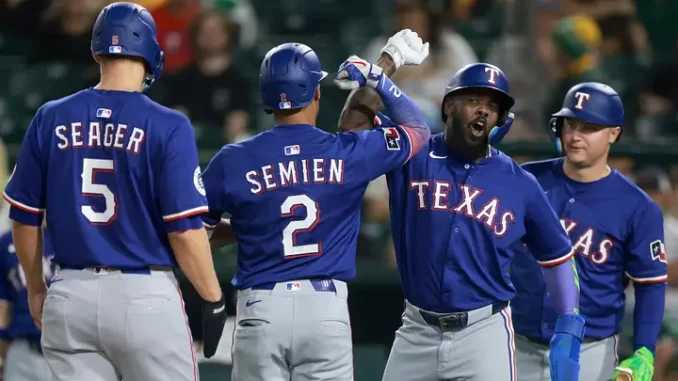
Texas Rangers manager Skip Schumaker explained the team’s reasoning for not using an opener in front of rookie pitcher Kumar Rocker during Monday night’s matchup against the Houston Astros. Although the Rangers had experimented with an opener in Rocker’s previous outing, Schumaker made it clear that the organization does not want that strategy to become a long-term routine.
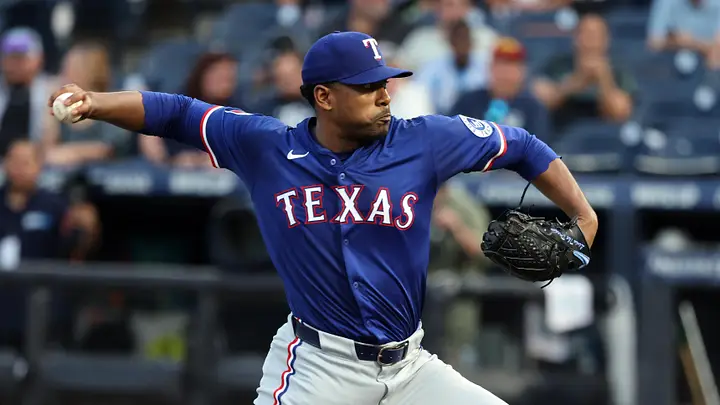
The decision came after Rocker delivered the strongest performance of his young MLB career during his last appearance in Colorado. In that game, Texas used left-handed pitcher Tyler Alexander to throw the opening inning before turning the game over to Rocker. The strategy appeared to work perfectly, as Alexander retired the side in order and Rocker followed with 7.2 shutout innings, the longest outing of his major league career.
However, things unfolded much differently against Houston. The Astros dominated in a 9-0 victory while also combining for a no-hitter against the Rangers lineup. Because Texas failed to generate any offense, Rocker was placed in an extremely difficult position from the beginning. While he did not pitch poorly overall, the lack of run support and a few costly mistakes ultimately contributed to another disappointing loss for the Rangers.
Rocker finished the game after five innings of work, allowing four runs on four hits while recording five strikeouts and issuing two walks. Although the outing was not nearly as dominant as his previous start, Schumaker emphasized that using an opener likely would not have changed the final result. The Rangers manager explained before the game that the opener strategy in Colorado was simply an attempt to help Rocker mentally reset after struggling early in games, particularly on the road.
According to Schumaker, the purpose of an opener is sometimes less about analytics and more about helping a pitcher adjust mentally and physically before entering the game. He described it as an effort to “trigger something” positive for the young right-hander.
Rocker later shared that the opener experiment allowed him to slightly modify his pregame bullpen routine and settle into the game more comfortably. Even in Colorado, though, his first inning was not completely smooth. He surrendered back-to-back singles before escaping trouble, though the Rangers had already provided him with a large early lead.
Texas hoped Rocker could carry the confidence and rhythm from that performance into Monday’s contest against Houston. Schumaker admitted there is still a learning process involved as the organization evaluates what works best for the rookie pitcher. The coaching staff wanted to see whether Rocker could replicate some of the success from Colorado without needing the assistance of an opener.
There were at least a few encouraging signs. Rocker showed improvement during the opening inning, which had previously been a major problem area for him this season. Entering Monday’s game, he carried an alarming 11.25 ERA in first innings alone. Against Houston, he surrendered only one run in the first frame after hitting Jeremy Peña with a pitch before allowing a sacrifice fly by Yordan Alvarez. Though still not ideal, it represented progress.
After that, Rocker settled down effectively and retired seven consecutive batters at one point. He even carried a no-hitter into the fourth inning, matching Astros starter Tatsuya Imai inning for inning. His no-hit bid eventually ended when Alvarez connected for a solo home run on a well-located sinker that still resulted in solid contact.
Houston later added two more runs in the fifth inning before the Rangers turned the game over to the bullpen. Rocker admitted afterward that walks and free baserunners ended up hurting him the most during the outing.
Despite the loss, Schumaker said the Rangers are not ruling out the possibility of using an opener again in future starts for Rocker. At the same time, he acknowledged that repeatedly using the strategy could put added strain on the bullpen, especially during a stretch with few off-days remaining on the schedule.
Leave a Reply