The New York Mets’ offseason initially felt like one long gut punch for their fan base. After a season that ended with the club completely missing the playoffs, the winter brought even more disappointment as the organization moved on from several cornerstone players who had defined the roster for years. The departures of Brandon Nimmo, Pete Alonso, Edwin Díaz, and Jeff McNeil signaled a dramatic shift, leaving many to question the franchise’s direction and long-term vision.
For weeks, the prevailing mood around Queens was one of frustration and uncertainty. Losing that level of experience and star power would be difficult for any team to overcome, and at the time, there appeared to be no clear plan in place to offset those losses. Mets fans were left wondering whether the front office was tearing everything down or simply scrambling to reset after a failed season.

Slowly but decisively, however, president of baseball operations David Stearns began to reshape the narrative. Rather than attempting to replace outgoing stars one-for-one, Stearns took a different approach, targeting impact talent from multiple angles. The Mets made a splash by signing elite infielder Bo Bichette, instantly upgrading their infield with a proven offensive force and a player entering his prime. Not long after, the team pulled off a trade to acquire power-hitting outfielder Luis Robert Jr., injecting much-needed thump into the lineup.
The pitching staff also received a major boost with the addition of frontline starter Freddy Peralta. In one move, the Mets addressed a pressing need for a reliable, high-end arm capable of anchoring the rotation. Together, these acquisitions helped stabilize a roster that had looked alarmingly thin just weeks earlier.
As Newsday’s Laura Albanese noted, the Mets’ roster now appears far more complete—albeit assembled in a somewhat unconventional way. Credit has been directed toward Stearns for his flexibility and willingness to adapt under difficult circumstances. Rather than panicking or clinging to a failed core, he maneuvered through a challenging offseason with creativity and resolve.
While some of these moves initially caused anxiety among fans, the bigger picture is coming into focus. The Mets may not resemble their previous iterations, but they are beginning to look competitive again. The blend of established stars, high-impact newcomers, and calculated trades suggests a front office intent on remaining relevant rather than entering a prolonged rebuild.
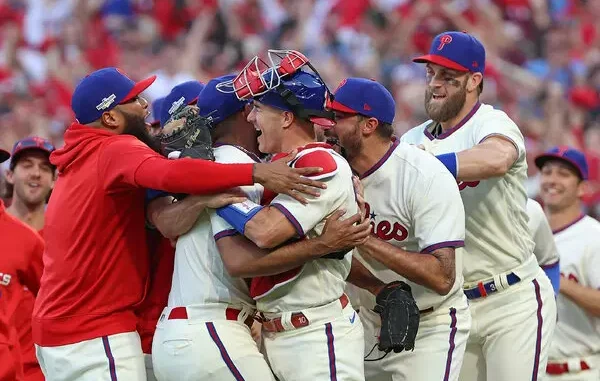
Adding to the intrigue is the Mets’ continued activity on the margins of the roster, including the acquisition of a longtime Philadelphia Phillies veteran—an especially notable move given the fierce rivalry between the two clubs. While not as flashy as earlier additions, moves like this signal that the Mets are now focused on depth, experience, and fine-tuning.
With most major holes addressed, the remainder of the offseason appears to be about refinement rather than reinvention. What once looked like a bleak winter in Queens is gradually turning into a measured reset, leaving fans with cautious optimism that the Mets are positioning themselves for a far more competitive season ahead.
Leave a Reply